
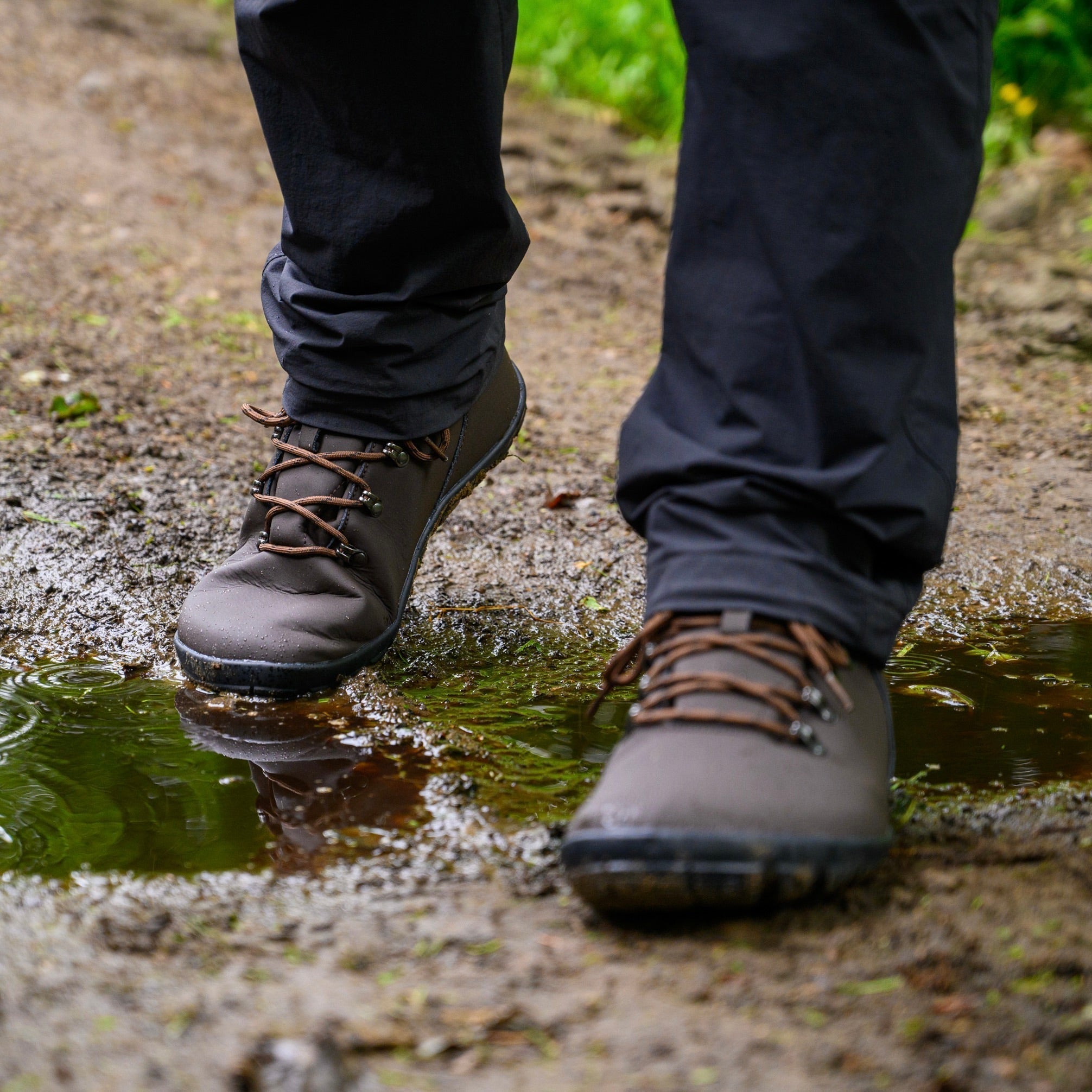
One of the most common questions we’re asked is: “Are barefoot shoes waterproof?”
The short answer is yes — some are, but barefoot shoes come with different levels of weather protection depending on how and where you plan to use them. Rather than a one-size-fits-all approach, our footwear prioritises function, breathability and natural movement, with waterproofing chosen to suit different environments and activities.
Understanding these differences helps you choose the right shoe for your adventures.
Fully waterproof
 Best for: Heavy rain boggy trails and long wet hikes.
Styles in this category: Chamois, Mudee 2, Mudee L2, Arken 2
Technology: Fully waterproof barefoot shoes use a 3-layer waterproof and breathable membrane, combined with a water-resistant outer material. This membrane prevents external water from entering the shoe while still allowing sweat vapour to escape from the inside.
What this means for you:
-
Keeps your feet dry in prolonged wet conditions
-
Maintains breathability to reduce overheating
-
Ideal for long walks, hiking and muddy environments
-
Slightly warmer than non-membrane shoes due to added protection
These shoes are designed for people who want barefoot freedom without sacrificing protection in challenging weather.
Water resistant
 Best for: Everyday wear, active use, and mixed or unpredictable weather.
Styles in this category: Esk 2, Durham, Howgill and York 2
Technical: Water-resistant barefoot shoes are made using materials such as microfibre, leather, or DWR-treated mesh. These materials repel light moisture but don’t fully seal the shoe like a waterproof membrane.
What this means for you:
-
Handles rain showers, puddles, and damp ground
-
Dries faster than fully waterproof shoes
-
More breathable and flexible
-
Not designed for prolonged exposure to heavy rain or saturated terrain
This category is ideal if you want a versatile shoe that works across seasons.
Quick drying
 Best for: Warm weather, dry conditions, travel and everyday movement.
Styles in this category: Feldom 2, Zennor 2, Flex 2 and Tanga 2
Technical: These shoes have no waterproof membrane and use lightweight, breathable mesh uppers to maximise airflow and flexibility.
What this means for you:
-
Not waterproof
-
Extremely breathable and lightweight
-
Cool and comfortable in warm climates
-
If they get wet, they dry quickly
Quick-drying barefoot shoes are perfect for summer use or for people who prioritise breathability and ground feel over weather protection.
Choosing the Right Level of Waterproofing
When selecting barefoot shoes, consider:
-
Climate – cold and wet vs warm and dry
-
Terrain – trails, city streets or mixed use
-
Activity level – hiking, everyday wear or travel
-
Breathability needs – waterproof often means slightly warmer
Barefoot shoes balance natural movement with protection, so choosing the right level of waterproofing ensures comfort without compromising foot function.
You can also view our handy instagram guide here!